The Republic of Moldova has reached a defining milestone in its European integration journey: the launch of technical negotiations across all 33 chapters of the EU acquis.
With the opening of negotiations on the final clusters — Competitiveness and Inclusive Growth, Green Agenda and Sustainable Connectivity, and Resources, Agriculture and Cohesion — Moldova has now entered a new phase of its accession process. This marks the transition from political commitment to full technical alignment with European standards.
The step reflects both progress and trust.
Over the past years, Moldova has demonstrated consistent commitment to reforms, even in the face of regional instability, energy crises, and external pressure. Today, that effort is being recognized by European partners, who have endorsed Moldova’s readiness to advance negotiations across the entire acquis.
But beyond Brussels, the implications are tangible at home.
Each negotiation chapter translates into concrete improvements for citizens — stronger institutions, modern infrastructure, cleaner energy, safer food standards, better public services, and expanded economic opportunities. EU integration is not an abstract process; it is a transformation that reshapes everyday life.
The opening of all chapters does not mark the end of the journey — it marks its most demanding phase.
Ahead lies the detailed work of aligning legislation, implementing reforms, and delivering measurable results. The path requires sustained effort, institutional capacity, and political determination. But the direction is clear, and the momentum is real.
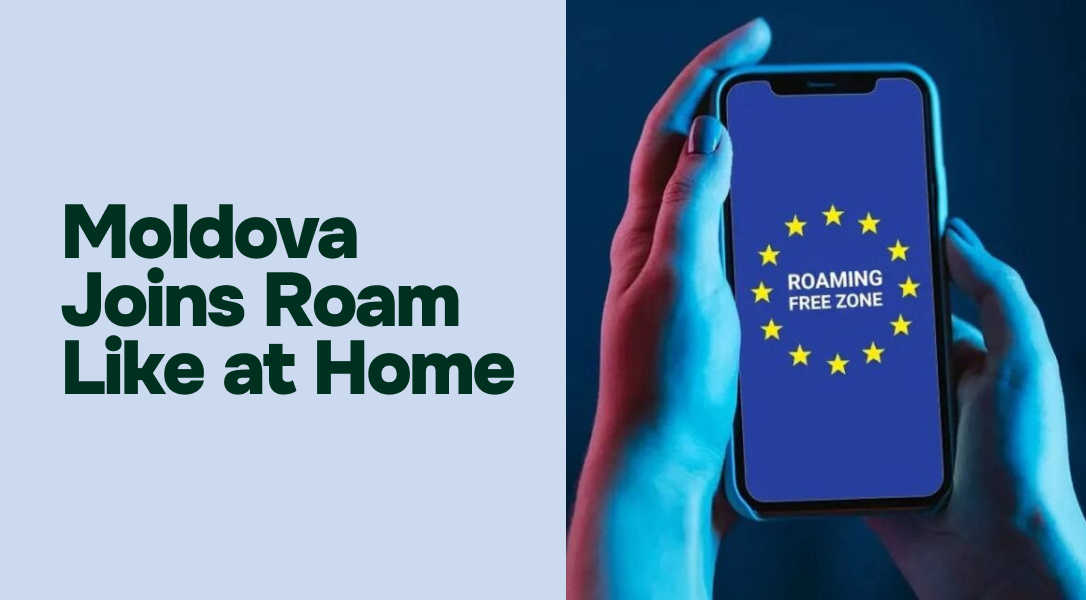
Starting 1 January 2026, Moldova will officially join the Roam Like At Home area, allowing Moldovan citizens to use mobile services across the European Union without additional roaming charges. Calls, messages and mobile data will cost the same as at home—just like for EU citizens.
It is a practical, everyday change that brings Moldova closer to Europe in one of the most tangible ways: connectivity.
What Roam Like At Home means in practice
Once the system enters into force, Moldovans travelling in the EU will be able to:
Make and receive calls at domestic tariffs
Use mobile data without extra roaming fees
Stay connected across borders without fear of unexpected bills
For students, entrepreneurs, diaspora members, tourists and professionals, this means freedom of movement backed by digital certainty.
More than convenience: digital integration
Roam Like At Home is not only a consumer benefit—it is a sign of regulatory alignment and trust. Moldova’s inclusion confirms that the country has met the technical, legal and market conditions required to integrate into the EU’s digital single market rules.
It reflects years of reforms in:
Telecommunications regulation
Consumer protection
Market competition and standards alignment
In short, Moldova is playing by European rules—and being recognised for it.
A win for citizens, business and the diaspora
This step strengthens everyday ties between Moldova and the EU:
Moldovan businesses can operate and communicate more easily across borders
The diaspora stays seamlessly connected with home
Young people experience Europe as an accessible, integrated space
Digital connectivity becomes a quiet but powerful driver of European belonging.
Moldova, Europe—connected by default
From 2026, Europe will no longer start at the border when it comes to mobile communication. Moldova’s inclusion in Roam Like At Home shows how European integration translates into real-life benefits—felt not in declarations, but in daily routines.
This is what progress looks like when it reaches people’s pockets, phones and lives.
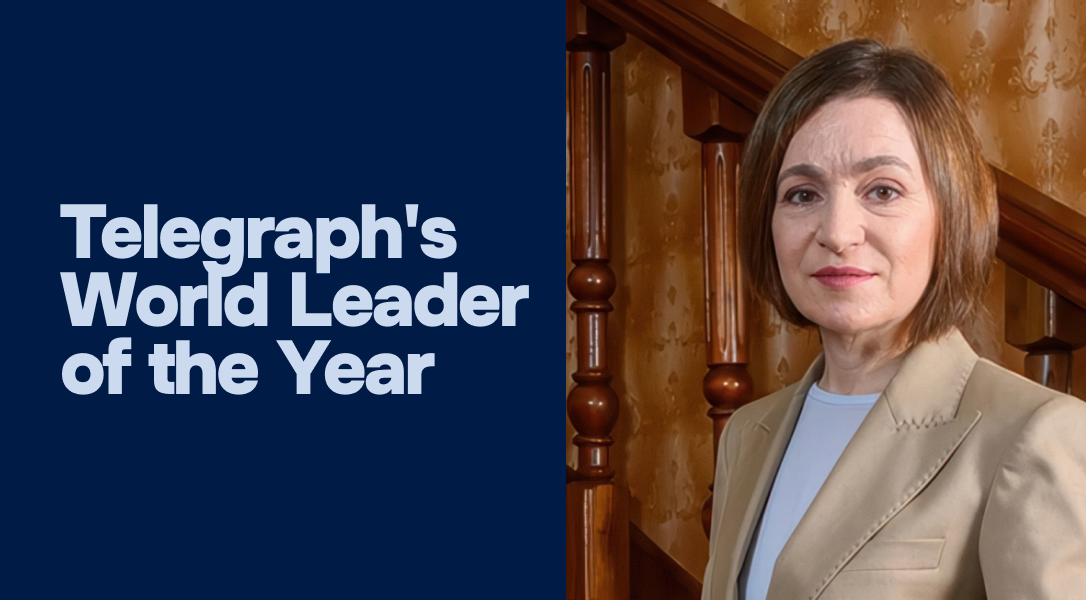
At a moment when Europe is redefining its future, Maia Sandu stands out as a leader who chose courage over convenience. In its year-end global ranking, The Telegraph named the President of the Republic of Moldova World Leader of the Year, recognising not only her personal leadership, but the direction Moldova has taken under her mandate.
For a small country at Europe’s eastern edge—often tested by geopolitical pressure, energy blackmail and disinformation—this recognition is more than symbolic. It is a signal that Moldova’s choices matter, and that principled leadership still counts on the global stage.
Leadership under pressure, not in theory
According to The Telegraph, Maia Sandu’s leadership stands out for one essential reason: she has governed in crisis without abandoning democratic values. Since taking office, she has led Moldova through overlapping shocks—Russia’s war against Ukraine, hybrid attacks, economic turbulence and attempts to destabilise the state—while keeping the country firmly anchored to the European path.
Rather than opting for populism or neutrality by fear, Sandu chose clarity: defending democracy, strengthening institutions, and aligning Moldova with European norms—even when that path came with political costs at home.
A European choice, made with responsibility
Under Maia Sandu’s leadership, Moldova:
Obtained EU candidate status, a historic milestone for the country
Accelerated reforms in justice, anti-corruption and public administration
Reinforced energy security and reduced dependency on hostile actors
Acted as a responsible partner for regional stability, especially in the context of the war in neighbouring Ukraine
The Telegraph highlights that Sandu’s leadership is not performative. It is consistent, disciplined, and rooted in long-term vision rather than short-term applause.
Why this matters for Moldova—and for Europe
This recognition is not only about one person. It is about what Moldova represents today:
A democracy that resists pressure
A society that chooses reform over stagnation
A country that believes its future is European—not by geography alone, but by values
In a year when many leaders hesitated, Moldova moved forward. Calmly. Decisively. With dignity.
Moldova, Europe—through leadership that delivers
At MoldovaInEU, we see this moment as a reflection of something larger: Moldova’s transformation from a country often spoken about into a country increasingly listened to. Leadership matters—and Maia Sandu’s leadership has placed Moldova firmly on Europe’s political and moral map.
Being named Leader of the Year by one of Europe’s most influential publications is not the end of a journey. It is confirmation that Moldova is on the right path—and that its voice belongs in Europe’s future.
On 15 January 2026, MoldovaInEU launched the documentary Moldova, Fearlessly Moving Forward — a film that captures today’s Moldova and the clear direction the country has chosen: reforms, resilience, and Europe.
This documentary is not about distant ambitions or hypothetical scenarios. It is about a real process already in motion, built in recent years amid one of the most challenging regional contexts Europe has faced in decades.
A difficult context. A clear response.
The Republic of Moldova has been deeply affected by overlapping crises: the war in Ukraine unfolding in its immediate neighbourhood, the energy crisis, sustained economic and social pressure, and persistent disinformation campaigns aimed at weakening democratic institutions.
Moldova, Fearlessly Moving Forward shows how Moldova responded to these challenges — not through hesitation or ambiguity, but through concrete reforms, political responsibility, and a firm European course.
From European discourse to European delivery
Through the voices of Moldovan and European leaders, decision-makers, journalists, and partners, the documentary tells a central story: Moldova’s European path is no longer a promise. It is a measurable, visible process.
“Moldova’s European path is no longer a promise. It is a real process, built through reforms, resilience, and democratic commitment,”says Cristina Gherasimov, Deputy Prime Minister for European Integration, in the documentary.
At European level, this progress is clearly recognised. According to the European Commission’s Enlargement Report, Moldova has recorded the greatest progress among all candidate countries in the past two years — an assessment that places the country at the forefront of the EU enlargement process.
A rare recognition — and a strong signal
The message conveyed throughout the film is consistent and unequivocal:
Moldova has advanced faster in the past two years than in the previous three decades combined;
reforms are no longer declarative, but structural and functional;
political determination has become Moldova’s key differentiator among EU candidate countries.
The documentary sends a simple but powerful message:
Moldova’s European future is not distant or abstract. It is being built now.
Why this documentary. Why now.
Moldova, Fearlessly Moving Forward was filmed in November 2025 in Brussels, in the context of the country event “Moldova, Europe” — the first large-scale country event organised by the Republic of Moldova in the EU capital during a decisive year for its European trajectory.
The documentary is part of MoldovaInEU’s broader mission to explain Moldova’s European path in a clear, accessible, and credible way, to counter disinformation, and to present Moldova as it truly is: democratic, resilient, and firmly anchored in European values.
Credits:
Produced by: MoldovaInEU
Main support: Konrad Adenauer Stiftung Moldova
Special thanks to:
European Commission
PractNet
Soros Foundation Moldova
Moldova’s Diplomatic Mission to the European Union
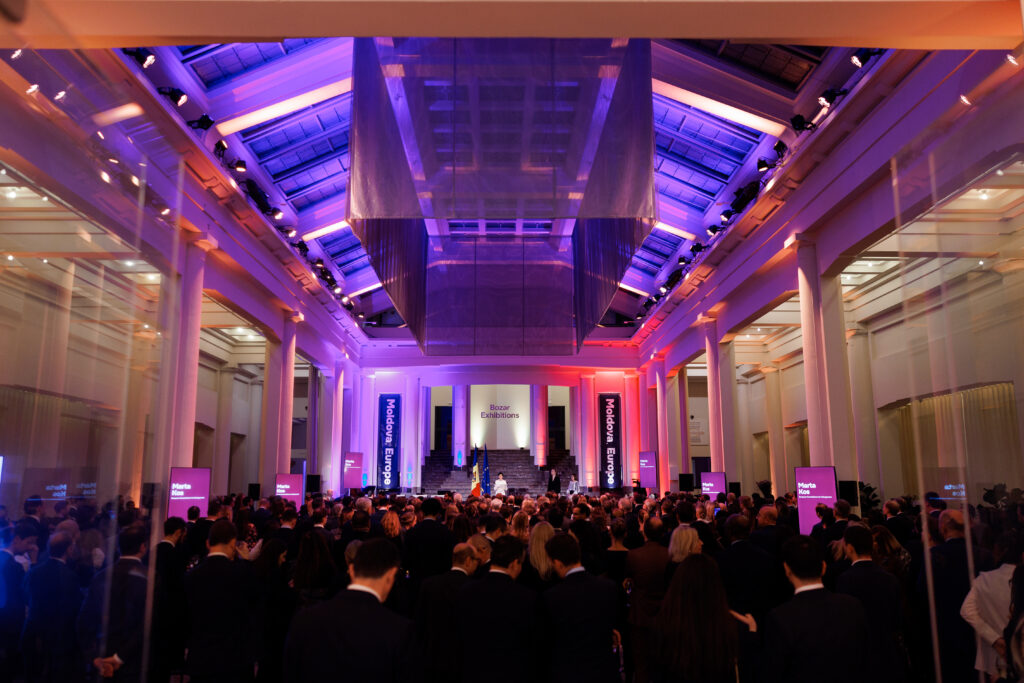
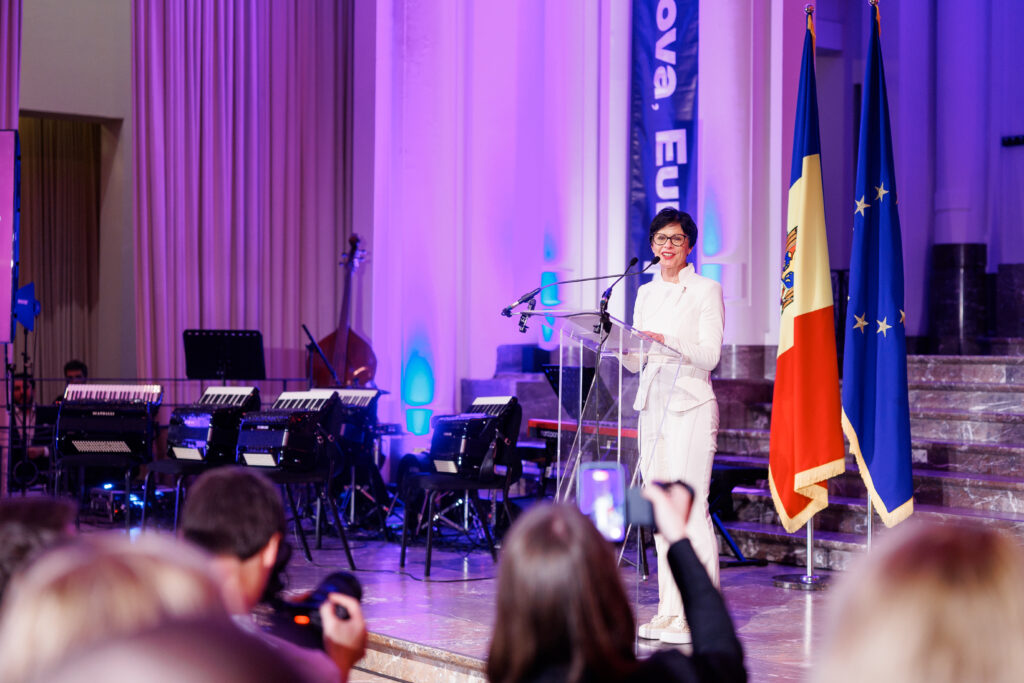
On November 4, in the heart of Europe – Brussels, Moldova presented itself through an evening of culture, identity and vision.
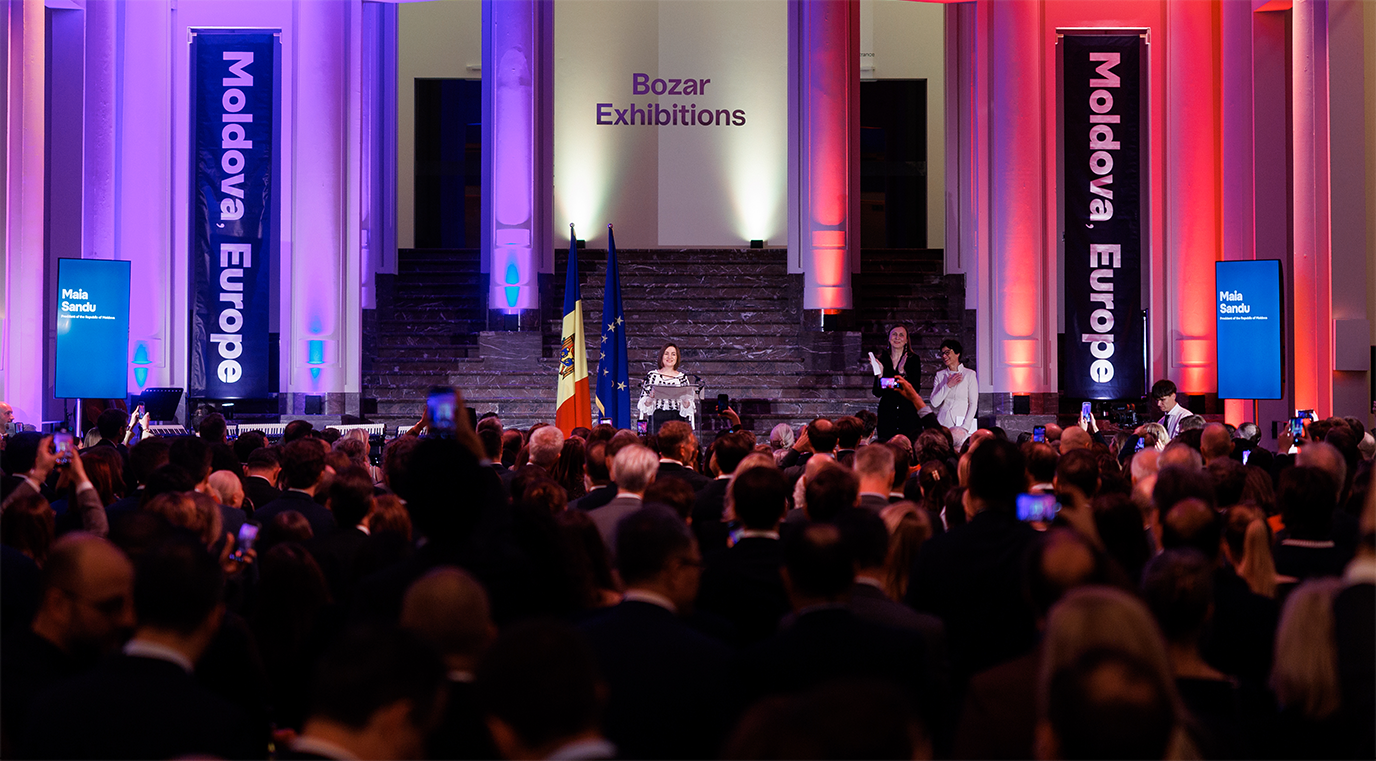
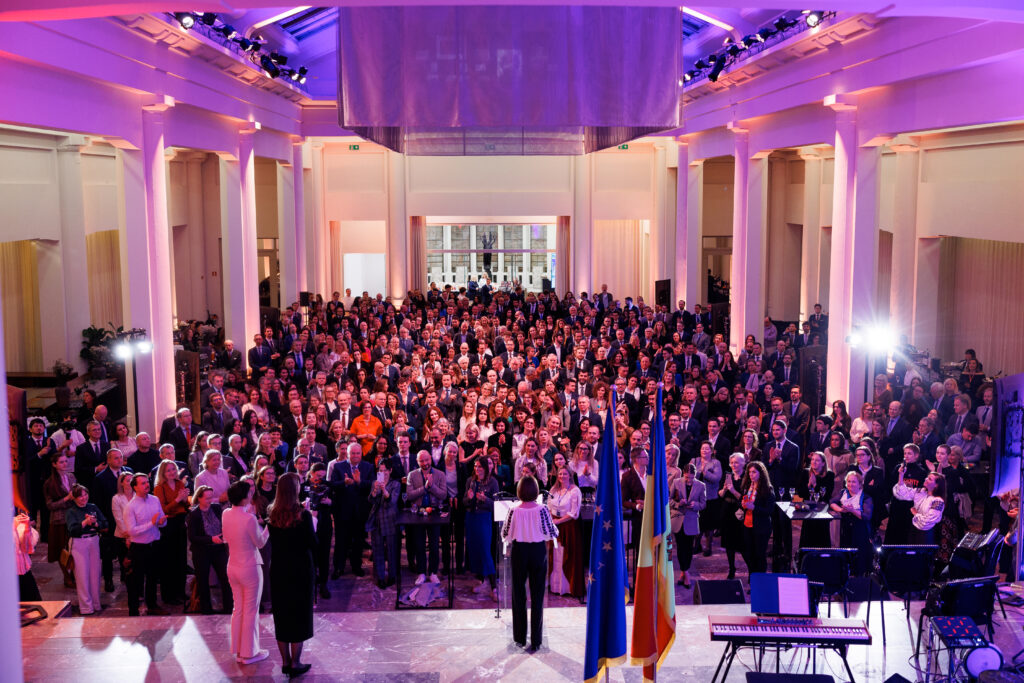
Hosted by the Diplomatic Mission of the Republic of Moldova to the European Union and conceptualized by the MoldovaIn.EU platform, together with the Bureau for European Integration, the event “Moldova, Europe” brought together more than 600 Friends of Moldova: European officials, diplomats, journalists, and partners who believe in a European Moldova.
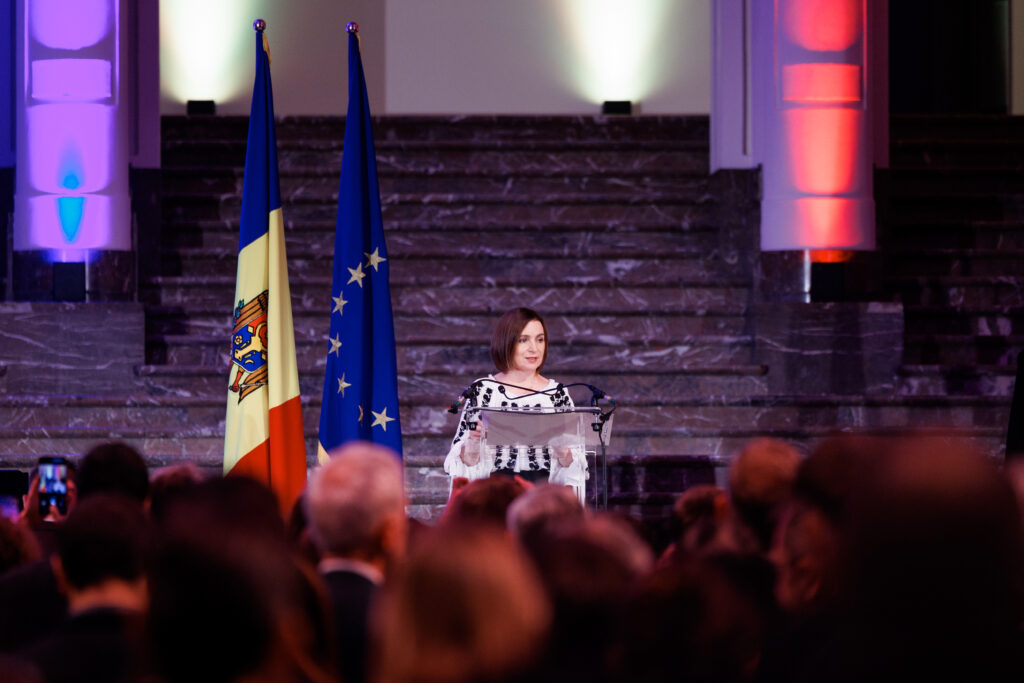
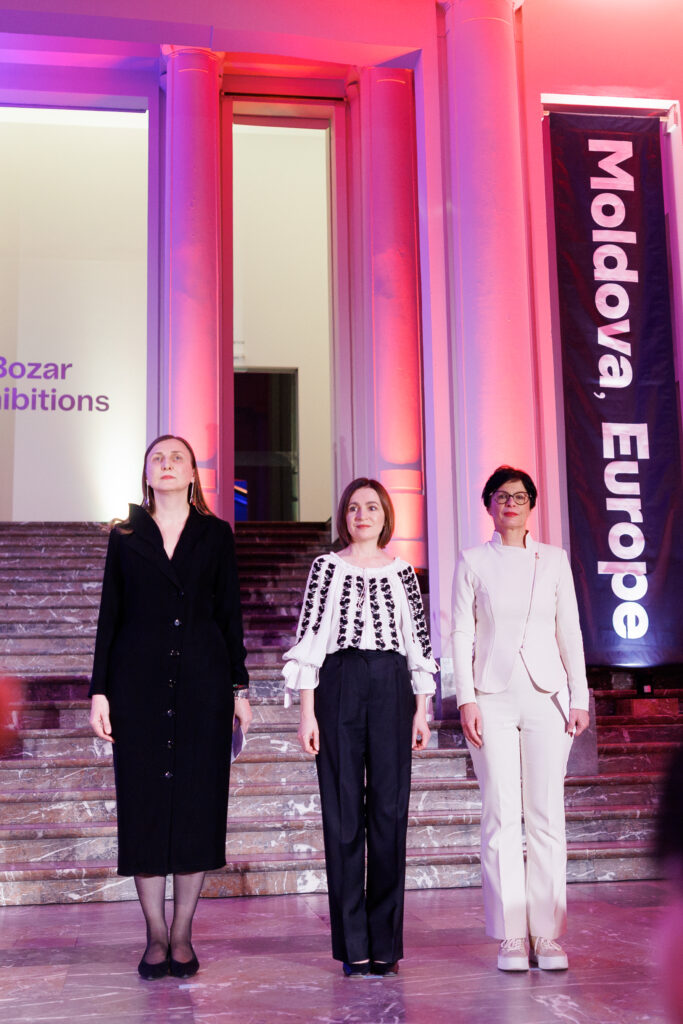
In the presence of President Maia Sandu and EU Commissioner Marta Kos, the evening became a symbol of Moldova’s European destiny – on the very same day when the European Commission’s Enlargement Report recognized Moldova as “the country that has made the biggest progress among all EU candidates.”
“Each of you, in your own way, has helped us face the many challenges of recent years – and still move forward on our European path. On behalf of the people of Moldova, thank you for standing with us,” said President Maia Sandu, addressing the audience at Bozar’s Victor Horta Hall.
An evening of meaning and emotion
The event unfolded as a journey through art, music, and identity, telling the story of a country that is both young and timeless – proud of its roots, confident in its European future.
The Concertino Ensemble of the National Philharmonic, together with soprano Diana Axentii and musicians Radu Țălămbuță and Dumitru Dubanjiu, filled the hall with the sound and spirit of Moldova.
Guests were immersed in the visual exhibition “Moldova, Europe”, a collection of portraits, landscapes, and stories curated by MoldovaIn.EU – showing the faces and places that define a fearless, forward-moving nation.
A taste of home, shared with Europe
The evening’s culinary experience blended tradition and innovation: a creative fusion of European and Moldovan cuisine led by Alexandru Șapco, Young Chef of the Year by Gault & Millau. Eleven Moldovan wineries showcased their finest selections, offered alongside the emblematic book “Moldova: People, Places, Food and Wine” by Angela Brașoveanu.
Every flavor, every note, every image told the same story — of a country that may be small in size, but vast in talent, ambition, and heart.
“Moldova stands today not only as a candidate for the European Union — but as a confident part of its future,” said Ambassador Daniela Morari, host of the evening and Head of the Mission of the Republic of Moldova to the EU.
More than an event – a declaration
“Moldova, Europe” was not a celebration of arrival, but a declaration of belonging.
Through culture and creativity, through honest stories and human connection, Moldova showed what it truly means to be European – not by geography, but by spirit.
As EU Commissioner Marta Kos emphasized, “Moldova’s progress is a story of courage — proof that Europe’s values are alive wherever people believe in them.”
A shared journey ahead
This evening in Brussels was not the conclusion of Moldova’s story — it was the beginning of a new chapter, one that belongs to all who believe, contribute, and stand with us.
🇲🇩 Moldova, Europe. Fearlessly moving forward.
Credits
Event: “Moldova, Europe” Location: Bozar | Centre for Fine Arts, Brussels Date: November 4, 2025 Organisers: MoldovaIn.EU | Bureau for European Integration | Mission of the Republic of Moldova to the EU With support from: PractNet, Soros Foundation Moldova, Konrad Adenauer Stiftung, Wine of Moldova, National Philharmonic and others
The stakes could not have been higher. The parliamentary elections were not just about seats in the legislature—they were about Moldova’s direction as a nation. On one side stood the pro-European forces, led by the ruling PAS, promising reforms, democracy, and EU membership. On the other, a coalition of pro-Russian parties and oligarchic interests, pushing a vision of “neutrality” that in practice meant dependency and stagnation.
Despite relentless disinformation campaigns, energy blackmail, and attempts at manipulation, Moldovans voted with clarity. More than X% of citizens turned out to cast their ballots, with the majority giving their trust once again to pro-European leadership. For Russia, which poured resources into undermining this election—from coordinated media propaganda to vote-buying schemes—this was a sobering defeat.
Russia’s interference—and Moldova’s resilience
The Kremlin’s toolbox was on full display: fake news, deepfake videos, bots targeting diaspora communities, and even financing networks designed to infiltrate the campaign. Yet Moldovans proved resilient. Civil society, independent media, and state institutions worked hand in hand to expose the schemes and defend the integrity of the vote. This election will be remembered not just for the result, but for the way Moldova stood up against hybrid warfare—and won.
Congratulations from Europe
The message was heard loud and clear in European capitals. President of the European Commission Ursula von der Leyen congratulated Moldovans for their “courage and clarity in choosing the European future.” European Council President Charles Michel wrote that Moldova’s democratic choice is “a victory for Europe itself.” Leaders from Paris, Berlin, Warsaw, and Bucharest hailed the outcome as proof that despite pressure, Moldova remains a steadfast partner, committed to peace and stability in the region.
Why this matters beyond Moldova
Moldova’s elections were not just a local story—they are part of Europe’s story. At a time when Russia wages war against Ukraine and tests the resilience of democracies across the continent, Moldova’s vote was a frontline defense of European values. This small nation, positioned at the crossroads of East and West, showed that democracy is stronger than disinformation, that hope can overcome fear, and that Europe remains the choice of free people.
The strategic importance cannot be overstated: Moldova secures a vital flank for regional stability, strengthens Europe’s eastern frontier, and deepens the bond between EU and Eastern Partnership countries.
A nation looking forward
For Moldovans, this is not only about geopolitics. It is about families who want to live in peace, young people who dream of opportunities at home rather than abroad, and farmers, teachers, and entrepreneurs who believe their work can flourish in a European Moldova.
Yes, the road ahead is demanding—reforms, rule of law, economic modernization. But the mandate is clear. Moldova has chosen Europe. Again. And with each choice, the path becomes more irreversible.
Moldova, Europe. A small country with a big voice. And yesterday, that voice spoke for democracy, peace, and a European future.
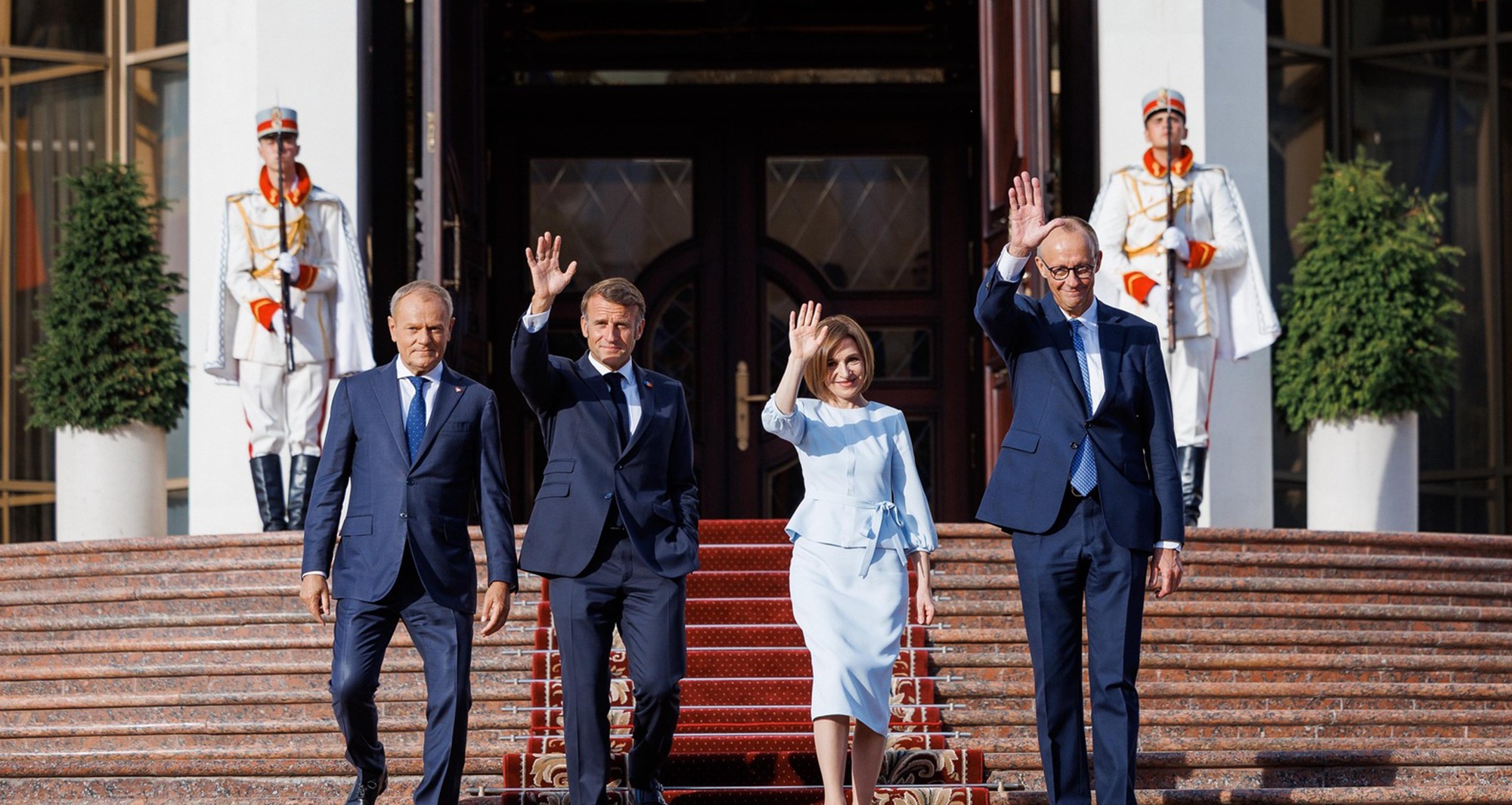
“Moldova matters… its future is in Europe.” Macron underscored that EU integration means prosperity, security, and modernization—and that the EU is not the USSR, rebutting Kremlin disinformation. France pledged technical expertise and financing for priority projects in energy, infrastructure, and the economy.
“There can be no secure Europe without an independent and secure Moldova.” Tusk framed Moldova’s accession as a security imperative for the whole continent, praising Moldovans’ resilience and commitment to shared values.
“You are wanted in the EU.” Merz said Germany will work this autumn to open the first negotiation clusters for Moldova’s accession, alongside continued expert support—especially on energy security and SME development.
Together, the messages were clear: Moldova’s European path is real, strategic, and supported across Europe’s major political families—a crucial signal ahead of the September 28 parliamentary elections, amid warnings about Russian hybrid interference.
No Caption
No Caption
No Caption
No Caption
No Caption
No Caption
No Caption
No Caption
No Caption
No Caption
No Caption
No Caption
Advocacy lens: what changes on Monday morning?
Political anchoring. The Weimar Triangle presence (France–Germany–Poland) delivers rare, high-signal alignment: Moldova’s reforms and accession track are not just bilateral favors; they are viewed as pan-European interests.
Operational support. Commitments referenced by Macron and Merz reinforce the toolbox Moldova needs now—energy resilience, infrastructure financing, SME growth, and EU-law alignment—with technical teams already in motion.
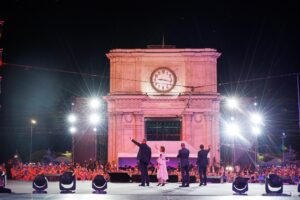
Narrative shift at home and in the EU. Leaders speaking Romanian from Moldova’s main square reframed the story from periphery and vulnerability to belonging and contribution. That matters for public confidence in reforms and for how Brussels and European capitals prioritize Moldova. ipn.md
The day in brief
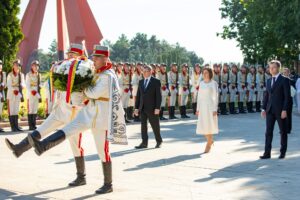
Who: Maia Sandu with Emmanuel Macron, Friedrich Merz, Donald Tusk.
Where: Presidential Palace (bilateral & joint talks), then PMAN stage.
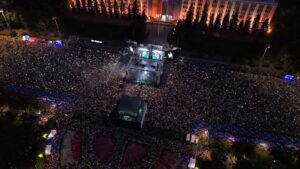
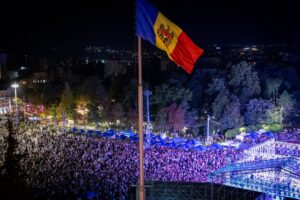
Crowd: 200,000+ in the capital (official police estimate).
Context: 34 years of independence; elections on September 28, 2025; continued Russian hybrid pressure.
Key quotes
“Moldova matters… Its future is in Europe.” — Emmanuel Macron
“There can be no secure Europe… without an independent and secure Moldova.” — Donald Tusk
“You are wanted in the EU… we will work this fall to open the first negotiation clusters.” — Friedrich Merz
Why this Independence Day was different
Independence Day always celebrates sovereignty. This year, it also showcased alignment: Moldova’s democratic choice, Europe’s strategic interest, and a shared commitment to peace in a region still scarred by Russia’s war against Ukraine. The message from Chișinău to Brussels—and from Brussels back to Chișinău—was reciprocal: Moldova is Europe, and Europe is stronger with Moldova.
The first bilateral Moldova–EU Summit, held in Chișinău, marks a new chapter for Moldova’s EU future. In a Joint Declaration, both sides reaffirmed Moldova’s rightful place in the European family and committed to accelerating reforms, investments, and partnerships that improve lives and protect democratic values.
President Maia Sandu thanked Moldova’s European partners for their trust and concrete support, while European Commission President Ursula von der Leyen praised Moldova’s “impressive resilience and determination.”
“The EU and Moldova share a future — and we will build it together,”
Ursula von der Leyen stated at the event.
Photo: Igor Turcanu
What was agreed?
At the summit, Moldova and the EU outlined an ambitious, people-centered plan:
First disbursement of €270 million under the €1.9 billion Growth Plan, funding key reforms to boost Moldova’s economy and create new jobs.
Moldova will work toward full integration into the EU Single Market, including joining SEPA (the euro payments area) by October 2025, eliminating roaming fees by January 2026, and rolling out free WiFi in public spaces under the WiFi4Moldova initiative.
Energy independence commitments, with a €330 million investment to modernize Chișinău’s heating system and connect the Vulcănești–Chișinău 400kV power line, ensuring Moldova is fully resilient to energy shocks by the end of 2025.
Peace and security through a joint security and defense partnership, including EU-backed cyber defense measures and expanded cooperation on countering hybrid threats.
Strong support for justice reform and anti-corruption, continuing Moldova’s vetting of top judges and the adoption of new legislation with EU technical support.
Moldova’s EU path moves forward
European leaders agreed that Moldova has made remarkable progress on reforms and is now ready to advance. The European Commission confirmed that Moldova will finish its accession screening by autumn 2025 and can open negotiations on the first negotiation cluster covering fundamentals such as the rule of law, human rights, and democratic standards.
The summit also pledged to deepen Moldova’s participation in EU agencies, such as the European Medicines Agency, the EU Agency for Fundamental Rights, and the European Environmental Agency, giving Moldova access to more European opportunities.
Why does this matter?
For Moldovan citizens, these commitments mean:
higher salaries and more jobs
secure, affordable energy
a stronger voice in Europe
safer, more democratic institutions
free movement and cheaper financial services
For Europe, it means:
a stronger, more resilient EU neighborhood
a trustworthy partner with shared values
stability and security on Europe’s eastern border
A stronger Moldova, a stronger Europe
This historic summit proves Moldova’s European path is real, tangible, and achievable. From energy independence to democratic reforms, the Moldova–EU partnership is helping Moldovans build a future anchored in European freedoms and opportunities.
As Ursula von der Leyen declared:
“We are with you — Moldova belongs in our European family.”
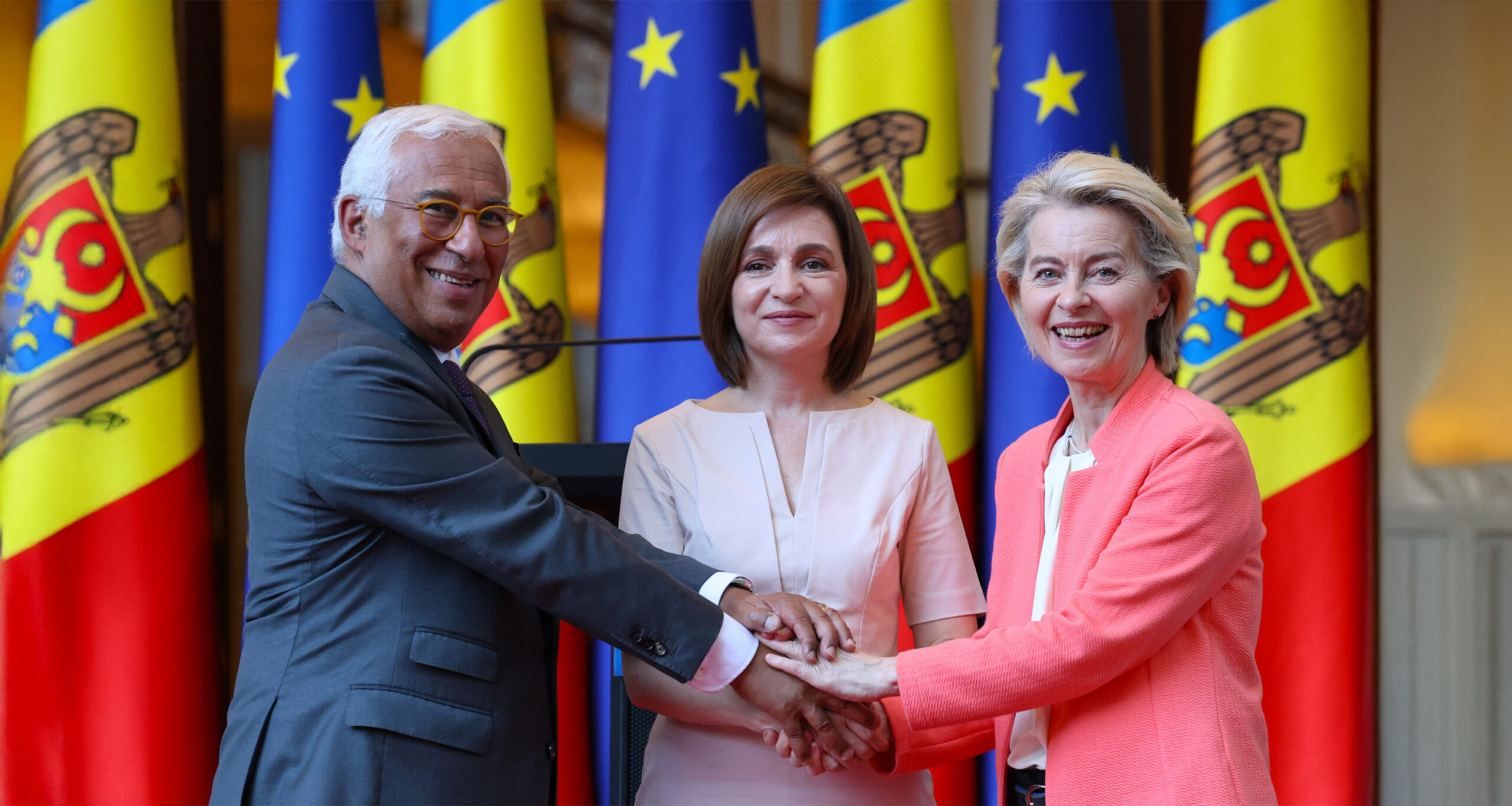
For the first time, the European Union and the Republic of Moldova are meeting in Chișinău for a dedicated bilateral summit—an event that cements Moldova’s strategic journey toward EU membership. Coming only weeks after the EU–Moldova Association Council of 4 June 2025, the summit underscores Europe’s unwavering support for Moldova’s democratic transformation and European aspirations.
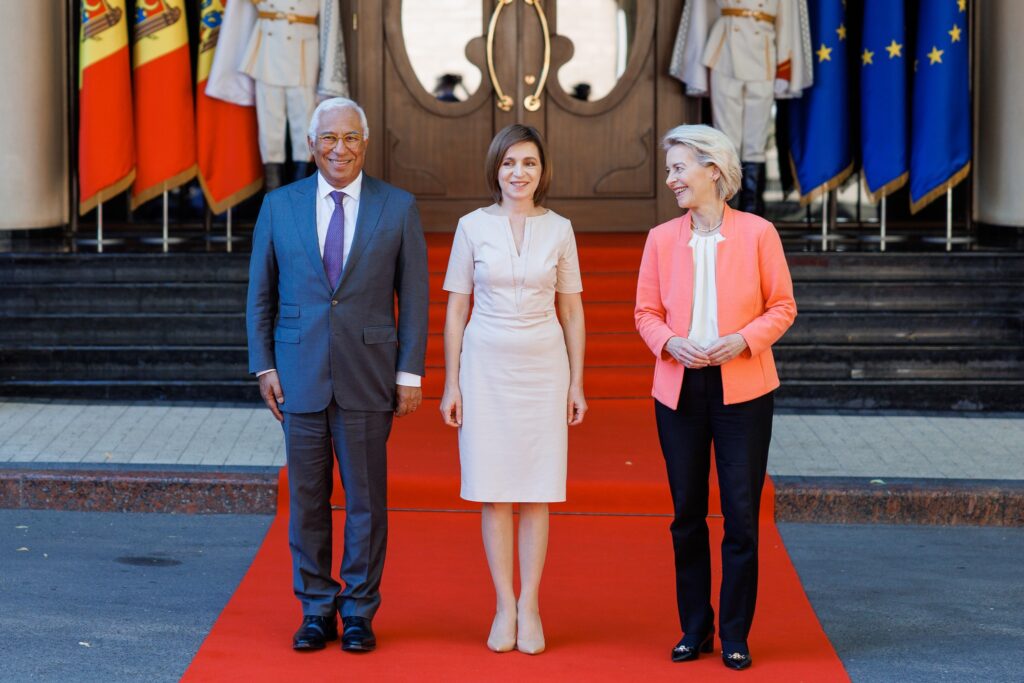
European Council President António Costa, European Commission President Ursula von der Leyen, and Moldovan President Maia Sandu will stand side-by-side with Moldova’s leadership, sending a powerful message of unity, solidarity, and shared destiny.
A summit amid turbulence—yet moving forward
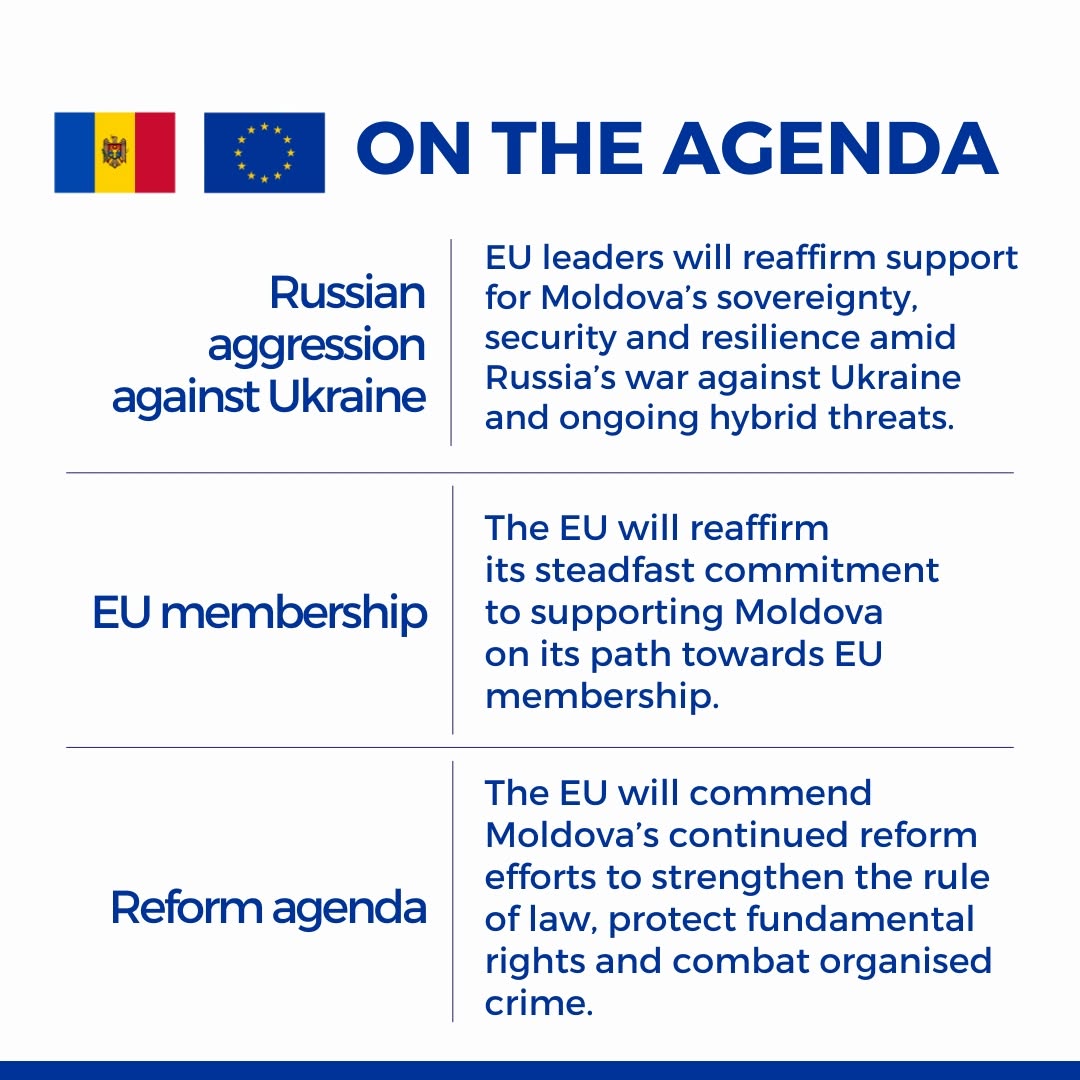
Held against the backdrop of Russia’s ongoing war of aggression against Ukraine and intensifying hybrid threats in the region, the meeting takes place at a critical moment. Moldova has faced air-space violations, energy shocks, disinformation campaigns, and the humanitarian pressure of refugee arrivals. Despite these challenges, the country continues to deliver on reforms and advance on the enlargement track.
The EU–Moldova Summit is therefore more than diplomatic symbolism; it is a public reaffirmation of Europe’s long-term political, financial, and strategic commitment. The gathering acknowledges Moldova’s tangible progress and the government’s ambitious reform agenda—from justice and anticorruption to economic modernisation.
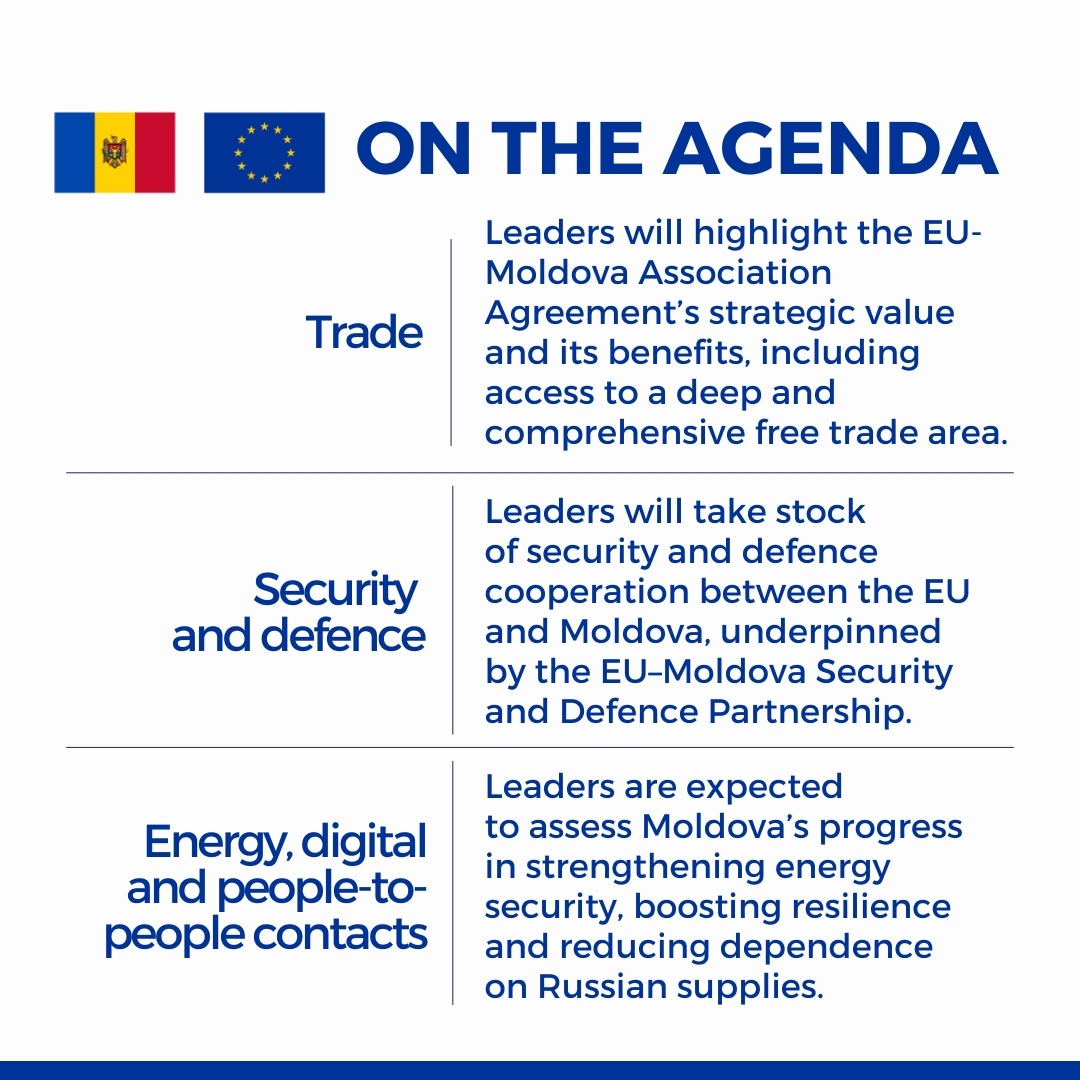
What is on the table?
EU integration milestones – Reviewing progress on the nine reform recommendations and setting the roadmap toward opening accession negotiations.
Sovereignty and security – Strengthening Moldova’s resilience against hybrid threats, including cyber-attacks and disinformation.
Energy diversification – Accelerating the shift away from dependency by investing in renewables and cross-border interconnectors.
Rule of law reforms – Deepening judicial independence, anticorruption measures, and public-administration modernisation.
Why Europe matters for Moldovans
Peace, prosperity, and opportunity. Europe means modern roads, state-of-the-art hospitals, quality education, protection from corruption, Schengen travel, stronger jobs markets, and demographic stability. It means funding for farmers, respect for cultural heritage, and the freedom to live without fear in a democratic, thriving society.
Moldova’s European course—now enshrined in the Constitution since 2024—remains the compass guiding every reform and every citizen’s hope.
“Europe will be alongside Moldova every step of the way.”
– Ursula von der Leyen, President of the European Commission
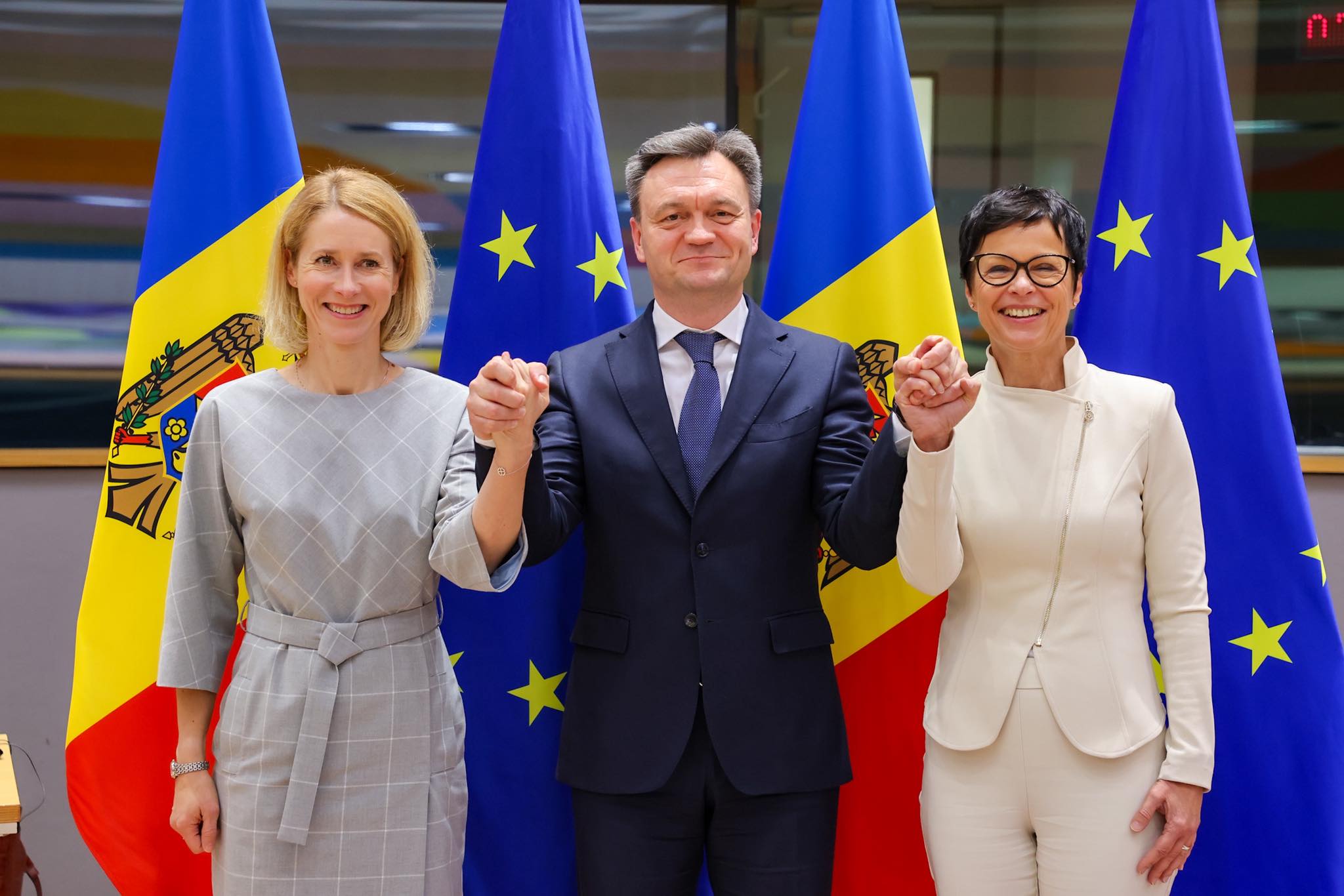
On 4 June, Brussels welcomed the ninth meeting of the EU–Republic of Moldova Association Council. Moldovan Prime Minister Dorin Recean chaired the session, while the EU side was led by the Union’s top diplomat, Kaja Kallas, alongside Marta Kos, Commissioner for Neighbourhood and Enlargement.
What was on the agenda?
Accession track– reviewing Moldova’s progress on the nine reform priorities and mapping the next steps toward opening negotiations.
Political dialogue & rule-of-law reforms – measuring advances in justice, anticorruption, and public-administration modernisation.
Economy & energy – accelerating interconnectors, diversifying supplies, and expanding zero-tariff trade opportunities.
Guarding democracy against hybrid threats
The Council devoted special attention to Russia’s ongoing war of aggression against Ukraine and its spill-over effects on Moldova: airspace violations, energy blackmail, and disinformation campaigns aimed at the upcoming parliamentary elections.
To counter these pressures, the EU announced:
An expanded EU Partnership Mission to boost institutional resilience.
A Hybrid Rapid Response Team on the ground in Chișinău, tackling illicit financing and foreign interference.
“The path is clear: Moldova belongs to Europe. Sustained reforms will keep the momentum alive”
Kaja Kallas, EU High Representative for Foreign Affairs and Security Policy